We’ve been building and supporting SuiteCommerce sites for NetSuite merchants for years. SuiteCommerce is a solid, native NetSuite ecommerce platform, and for plenty of businesses it’s still the right call.
Still, the same requests kept coming up in our projects: “Can we change the homepage ourselves?” “Why does swapping a banner need a development ticket?” “Can the site be faster without starting over?”
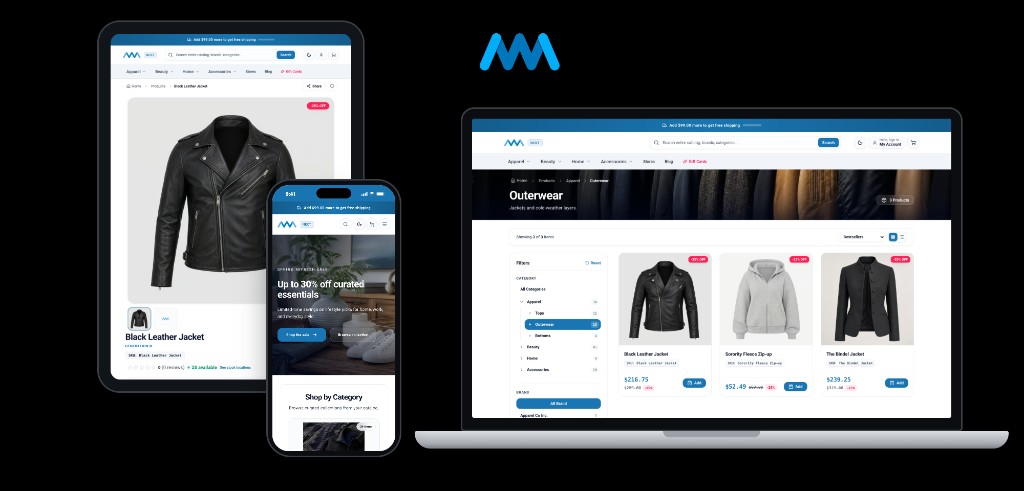
Those conversations led us to build AwaCommerce Next, a NetSuite SuiteApp that runs alongside the work we already do. It gives merchants another way to get modern, ERP-integrated ecommerce, and it’s an option for businesses looking at SuiteCommerce alternatives.
-
NetSuite remains the system of record
Items, matrix items, price levels, inventory by location, customers, and sales orders all stay in NetSuite.
-
Your team can edit the site
Layouts, colors, home page sections, headers, footers, and landing pages are managed in a no-code admin. Changes go live without a deployment.
-
No additional commerce license
Works with standard Oracle NetSuite (OneWorld, Standard, or Mid-Market) through native web services, without middleware or an iPaaS.
-
Continuous updates
Improvements ship to the platform regularly. There are no version migrations or re-implementation projects.
NetSuite ecommerce options today
Most NetSuite merchants who want to sell online end up weighing three options.
-
Native NetSuite ecommerce
SuiteCommerce or SCA
Oracle’s native NetSuite ecommerce product. It reads items, pricing, and inventory directly from the ERP and has a mature partner ecosystem. It also has trade-offs you should plan for.
-
Storefront with a NetSuite connector
Shopify, BigCommerce, or Magento
Strong storefront platforms with big app marketplaces. The catch is two systems of record: products, prices, customers, and stock move through middleware, sometimes in batches, and keeping them in sync becomes someone’s ongoing job.
-
Full control
A custom build
You get full control, but you pay more up front and maintain all of the code yourself.
What years of SuiteCommerce projects taught us
SuiteCommerce powers a lot of successful NetSuite stores, including many we built. We’ve also watched merchant expectations move faster than the platform in a few areas.
- The front-end stack is older
- SCA was built on Backbone.js, Handlebars templates, and jQuery-era patterns. Many storefronts today use server-rendered React and Next.js, which make site speed, ecommerce SEO, and Core Web Vitals easier to get right.
- It’s a separate license
- SuiteCommerce isn’t included with NetSuite. It’s another annual subscription in the budget.
- Implementation takes time and budget
- A good implementation usually means an experienced NetSuite partner, custom themes, extensions, and several months of work. The result fits the business well, but the cost is real, especially for small and mid-market merchants.
- Many changes go through a developer
- Layout changes, new page sections, checkout adjustments, and B2B rules often require code and a deployment instead of a setting a business user can change.
- Upgrades need planning
- Heavily customized themes and extensions can need rework between versions, so some merchants stay on older releases longer than they want to.
- The store and the ERP share resources
- Browsing and search run close to NetSuite, so heavy traffic on the site and heavy activity in the ERP can affect each other.
Headless commerce on NetSuite
AwaCommerce Next connects natively to NetSuite like SuiteCommerce does, offers a modern storefront like the big SaaS platforms do, and doesn’t need a custom build or a second system to run.
-
NetSuite remains the system of record
Items, matrix items and variations, price levels, inventory by location, customers, and sales orders all stay in NetSuite.
-
The storefront is headless and fast
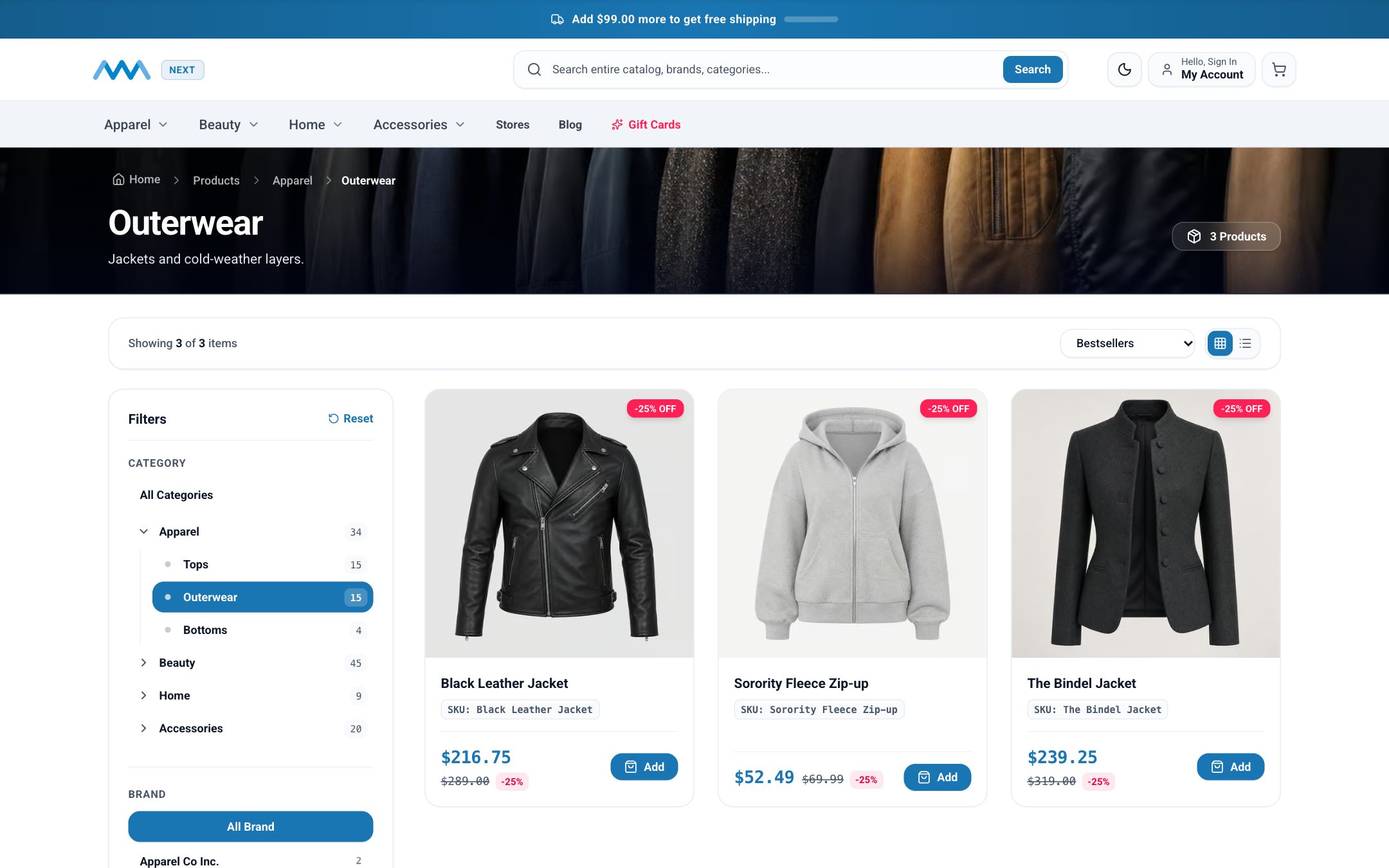
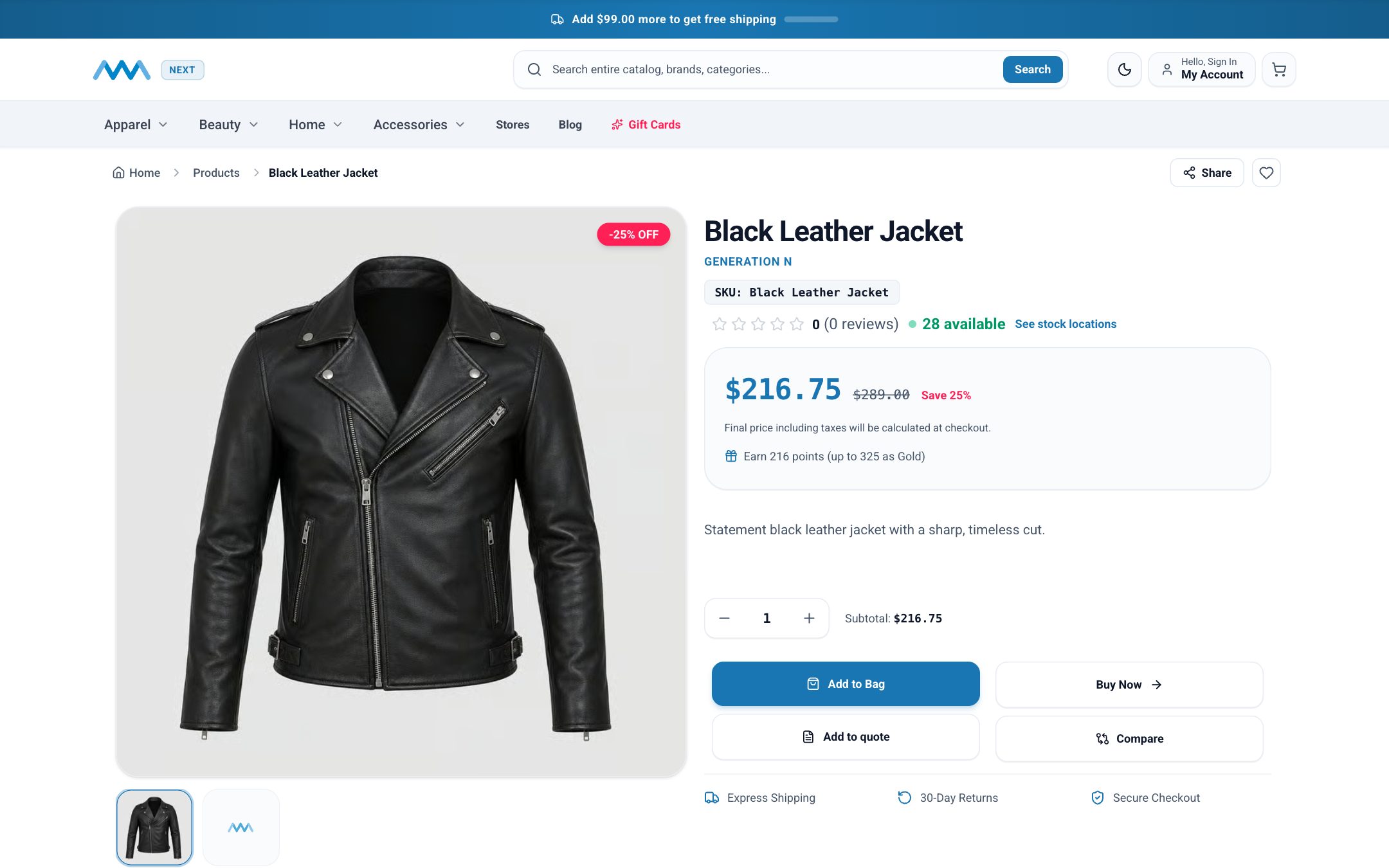
Catalog pages, faceted search, and product pages come from a cached commerce layer built on current web technology, so they load quickly and index well.
-
Checkout is checked live against NetSuite
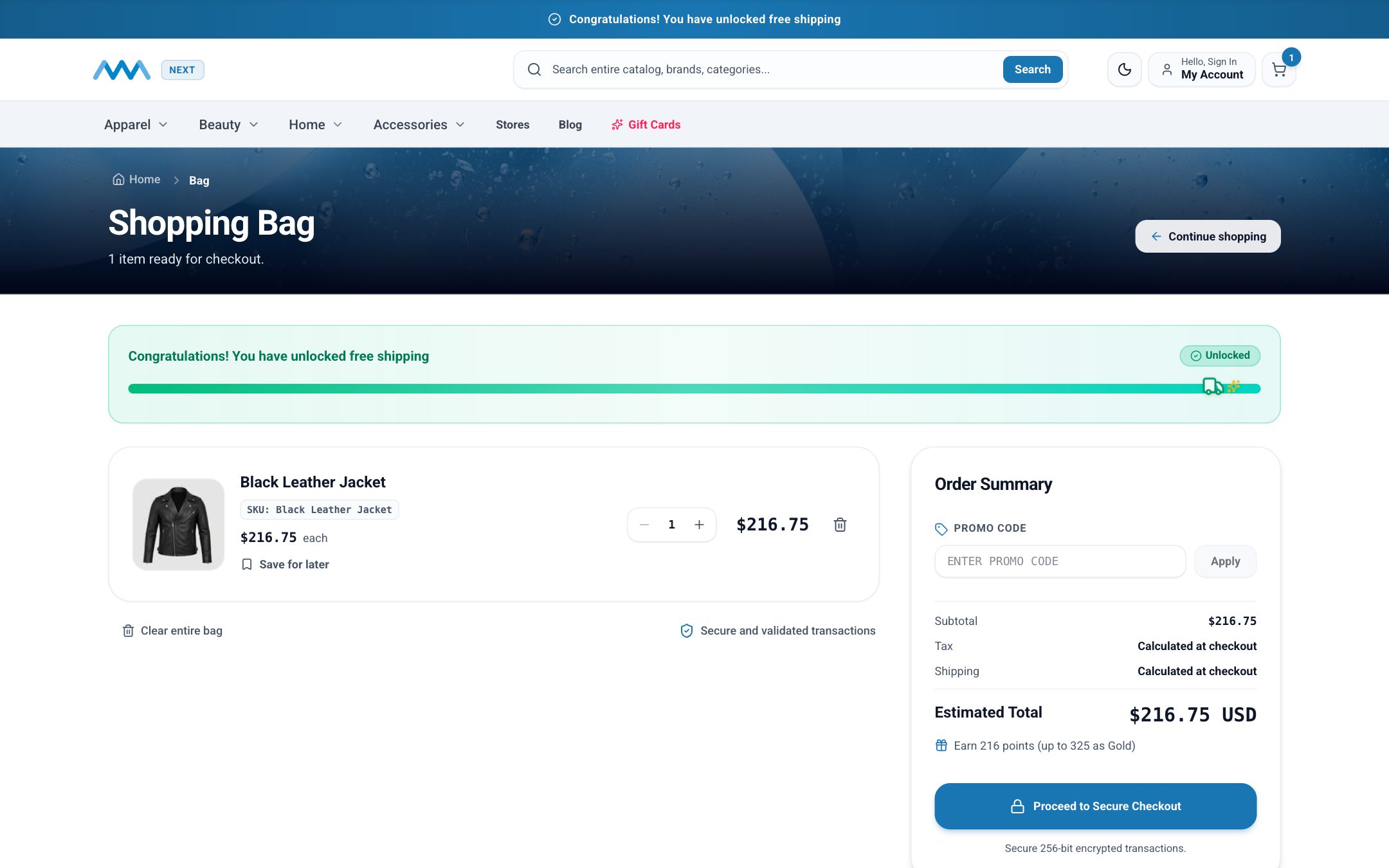
Before a sales order is created, price, inventory, tax, and shipping rates are confirmed with NetSuite. Browsing is fast, and orders are accurate.
One NetSuite catalog for every channel
Every channel uses the same items, the same inventory, and the same customer records, so there’s no data to sync between systems.
-
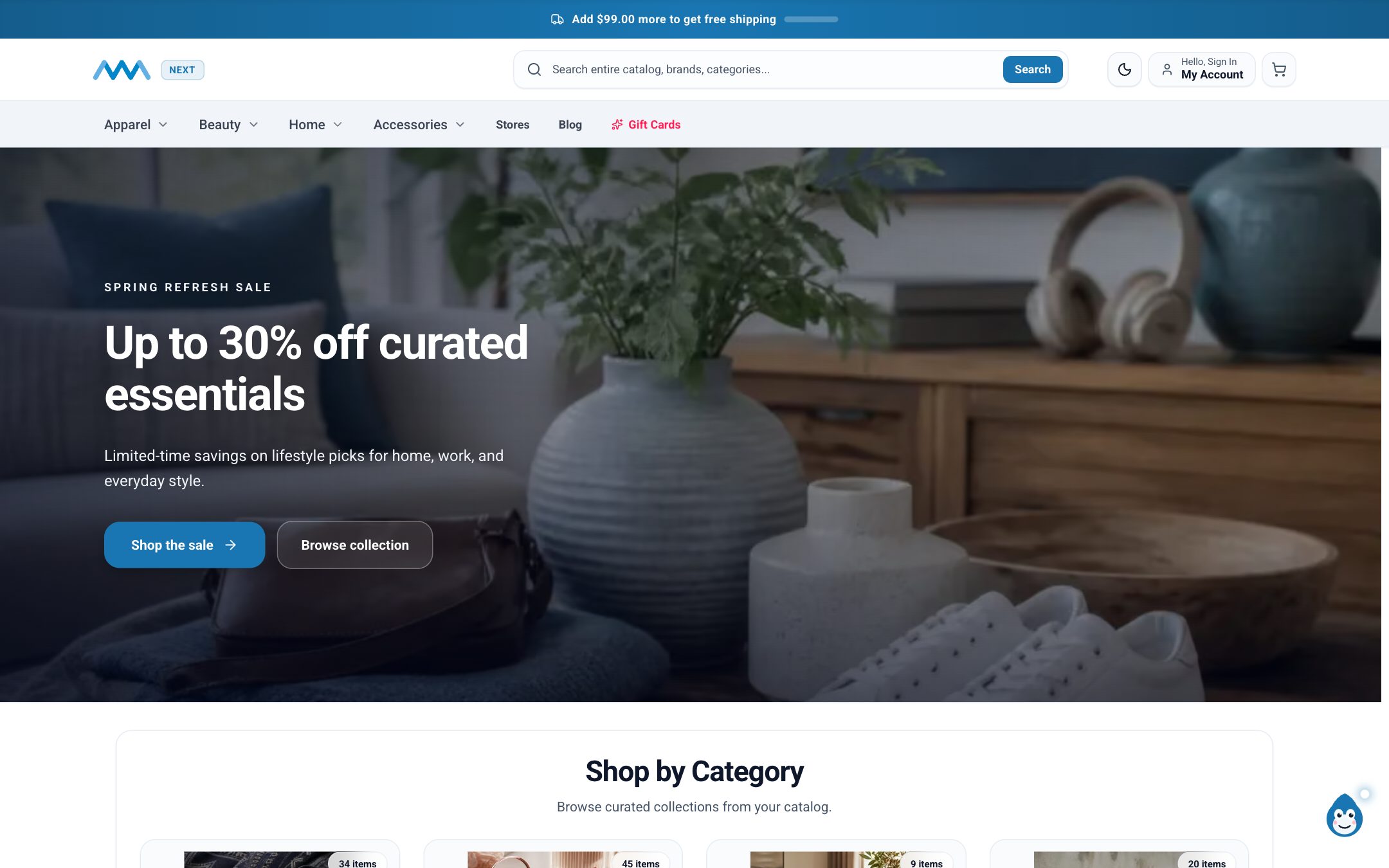 Retail and direct to consumer
B2C storefront
Guest checkout, promo codes from NetSuite coupons, Apple Pay, Google Pay, PayPal, and buy now, pay later.
-
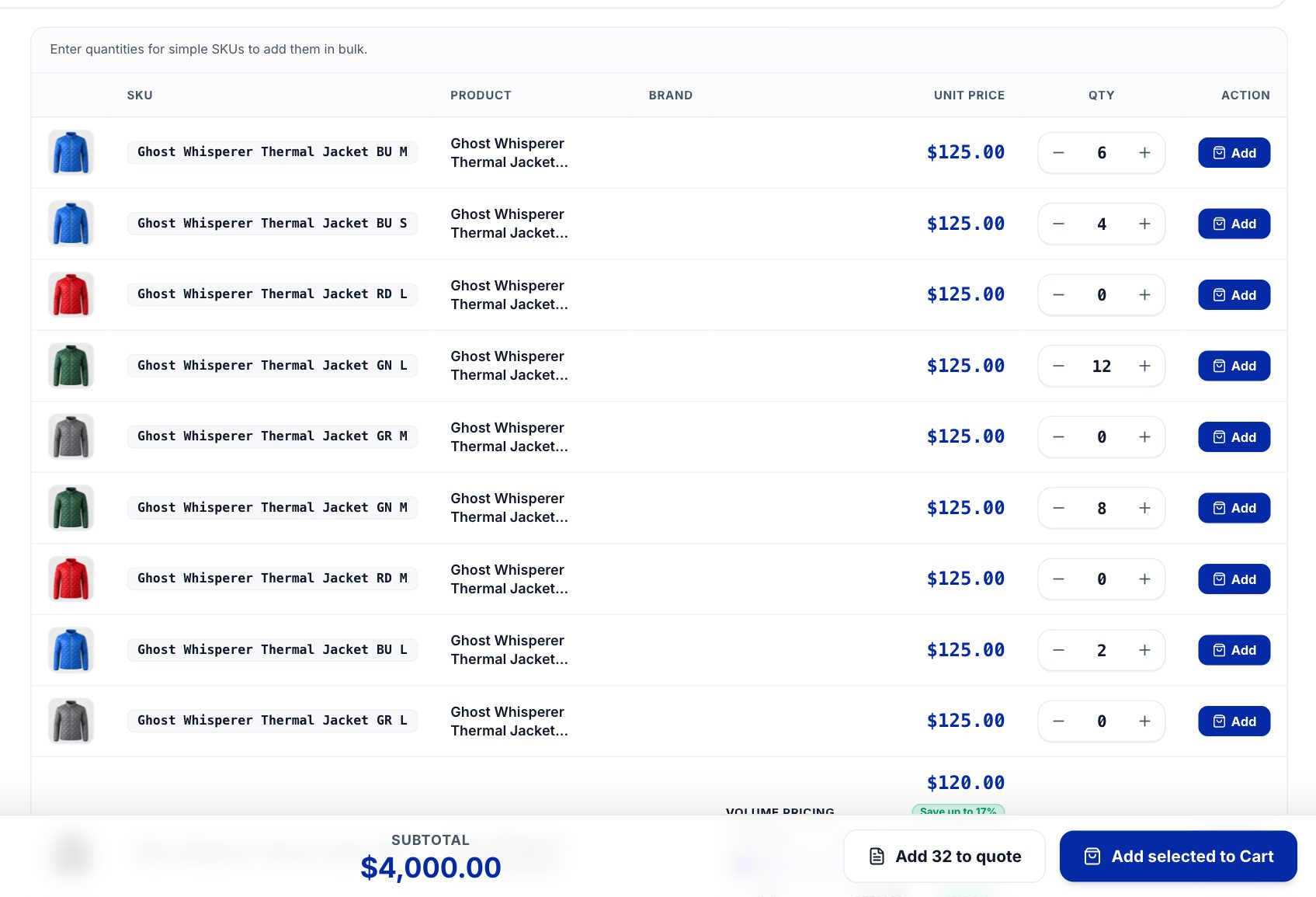 Distributors and dealers
B2B wholesale portal
Customer-specific price levels, volume and tier pricing, quote requests (RFQ), quote-to-order, Net terms, CSV bulk order import, and one-click reorder.
-
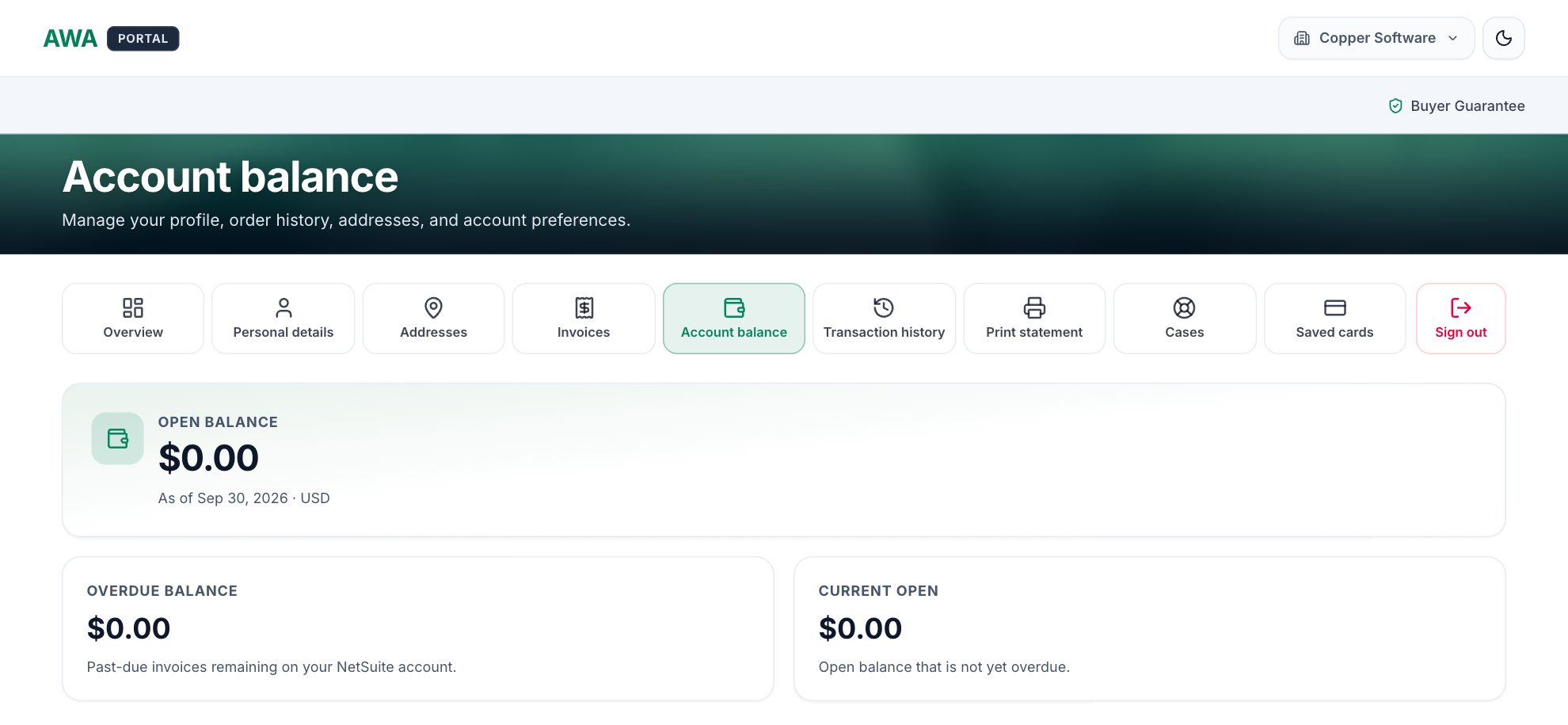 Self-service accounts
Customer portal
Invoices, order history, account balance, printable statements, and online invoice payment.
Manage every site from inside NetSuite
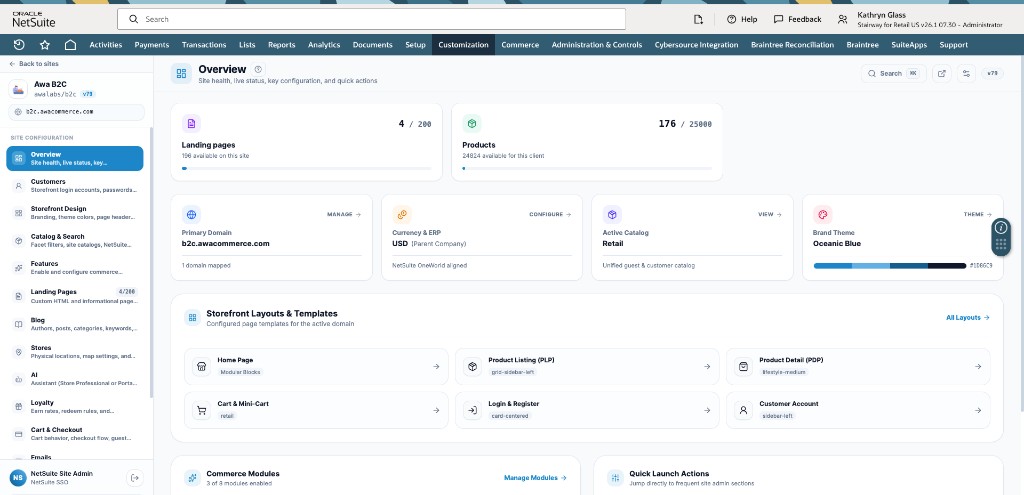
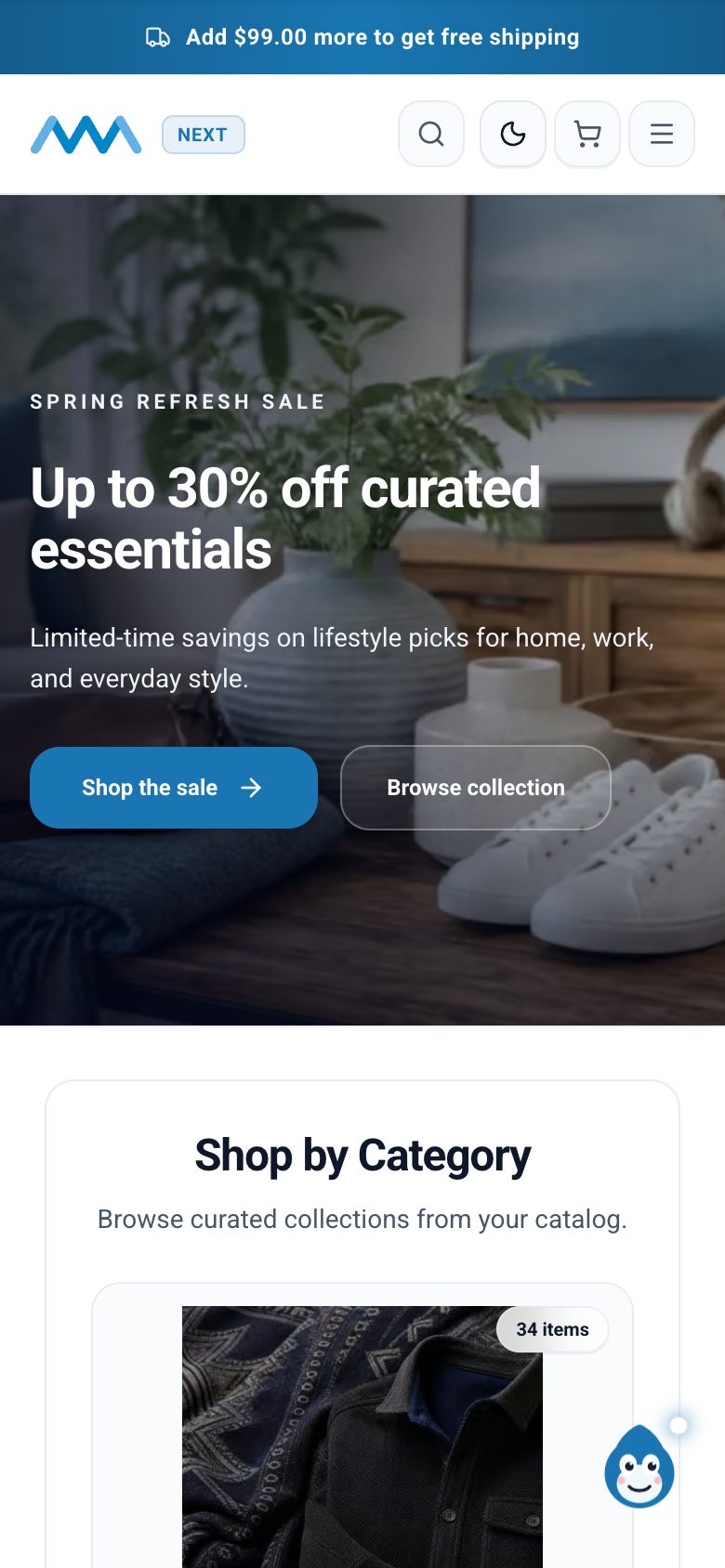
Each site has its own admin screen inside NetSuite. Your team changes design, catalog, content, and checkout settings there, without opening a development ticket.
Why merchants choose AwaCommerce Next
A B2B wholesale buyer’s Monday
Maria buys for a regional distributor. Here’s her Monday morning on her company’s B2B portal.
AwaCommerce Next is a good fit if you
If your current SuiteCommerce site is working well for you, keep it. We still build and support SuiteCommerce, and we’re happy to help you figure out which NetSuite ecommerce option fits your business.
Sell everywhere, stay on NetSuite
Compare licenses, explore features, and build your own package at awacommerce.com. Questions? Email us at [email protected] or send a message below.